

Bengali sarees are celebrated for their timeless elegance, traditional craftsmanship, and deep cultural significance. Among the most recognisable styles are Mahapaar and Laal Paar sarees, both of which beautifully represent Bengal's rich handloom heritage. Although these sarees share certain design elements, their border styles, overall appearance, and styling possibilities make them distinctive.
A traditional Laal Paar saree is known for its classic white body and red border, while a Mahapaar saree is distinguished by its broad, prominent border that creates a more striking appearance. Both styles are closely associated with Bengali celebrations, particularly Durga Puja, weddings, religious ceremonies, and cultural gatherings.
Whether you prefer the understated elegance of a Bengali Laal Paar saree or the bold beauty of a Mahapaar saree, understanding their differences can help you choose the perfect drape. This guide explores their design characteristics, cultural significance, fabrics, styling options, and suitable occasions.
Mahapaar vs Laal Paar Sarees: Understanding the Key Differences
Although Mahapaar and Laal Paar sarees are often associated with traditional Bengali fashion, the terms describe different design characteristics. Understanding these differences makes it easier to appreciate the craftsmanship and choose a saree that complements your personal style.
1. What Is a Mahapaar Saree?
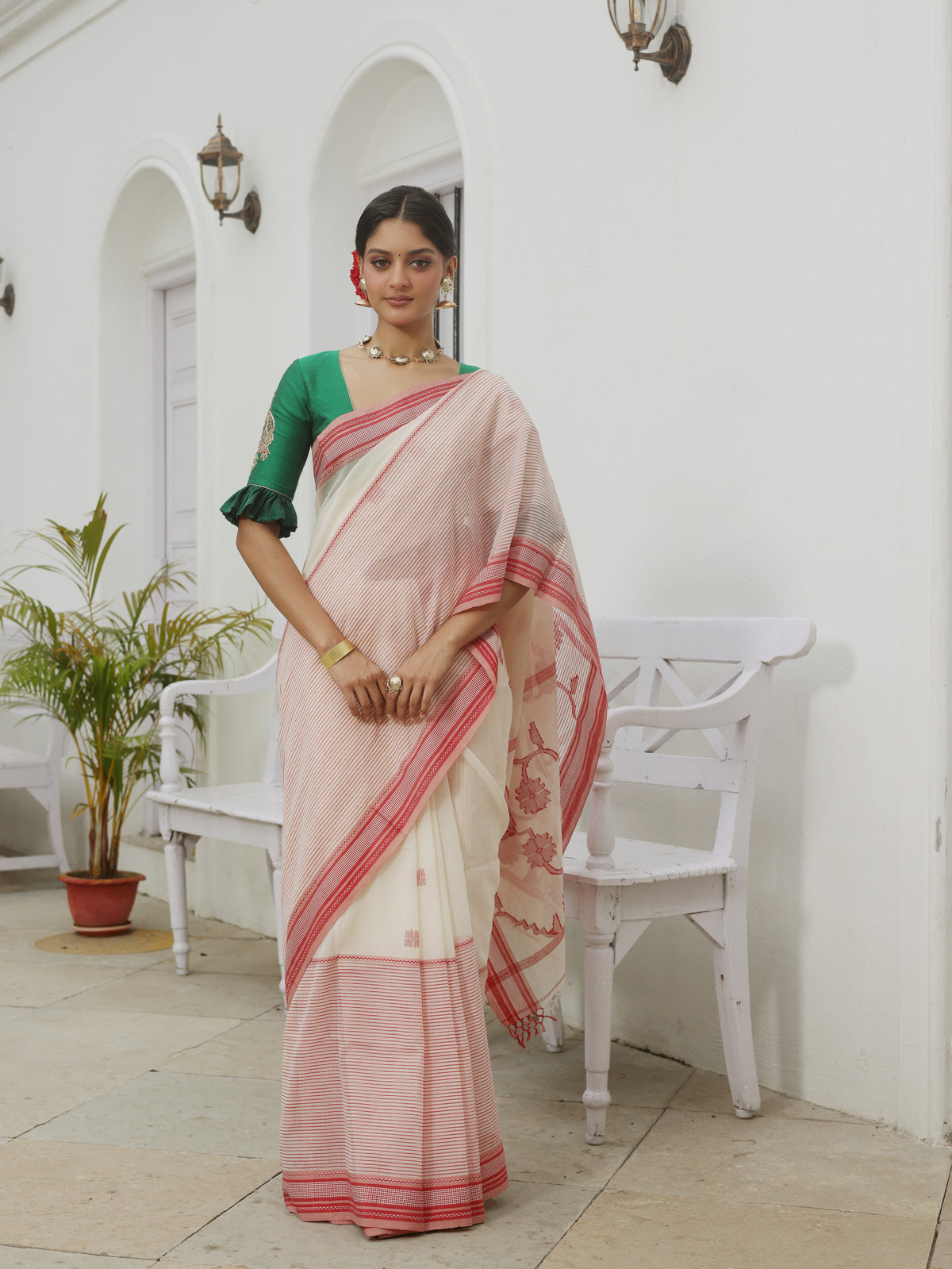
A Mahapaar saree is a traditional Bengali saree characterised by its broad and prominent border. The word Mahapaar refers to a grand or wide border, which becomes one of the most noticeable design elements of the saree.
Unlike sarees with narrow borders, Mahapaar sarees create a striking visual appearance through their bold border proportions. Depending on the design, these borders may feature geometric patterns, floral motifs, traditional Jamdani detailing, or contrasting colours.
The Chowringhee Classic Lal Par Sada Cotton Jamdani Saree beautifully represents this style with its white cotton base, bold red geometric floral motifs, and broad striped Mahapaar border.
Mahapaar sarees are particularly suitable for festive occasions, cultural celebrations, and gatherings where you want your traditional attire to make a distinctive impression.
2. What Is a Laal Paar Saree?
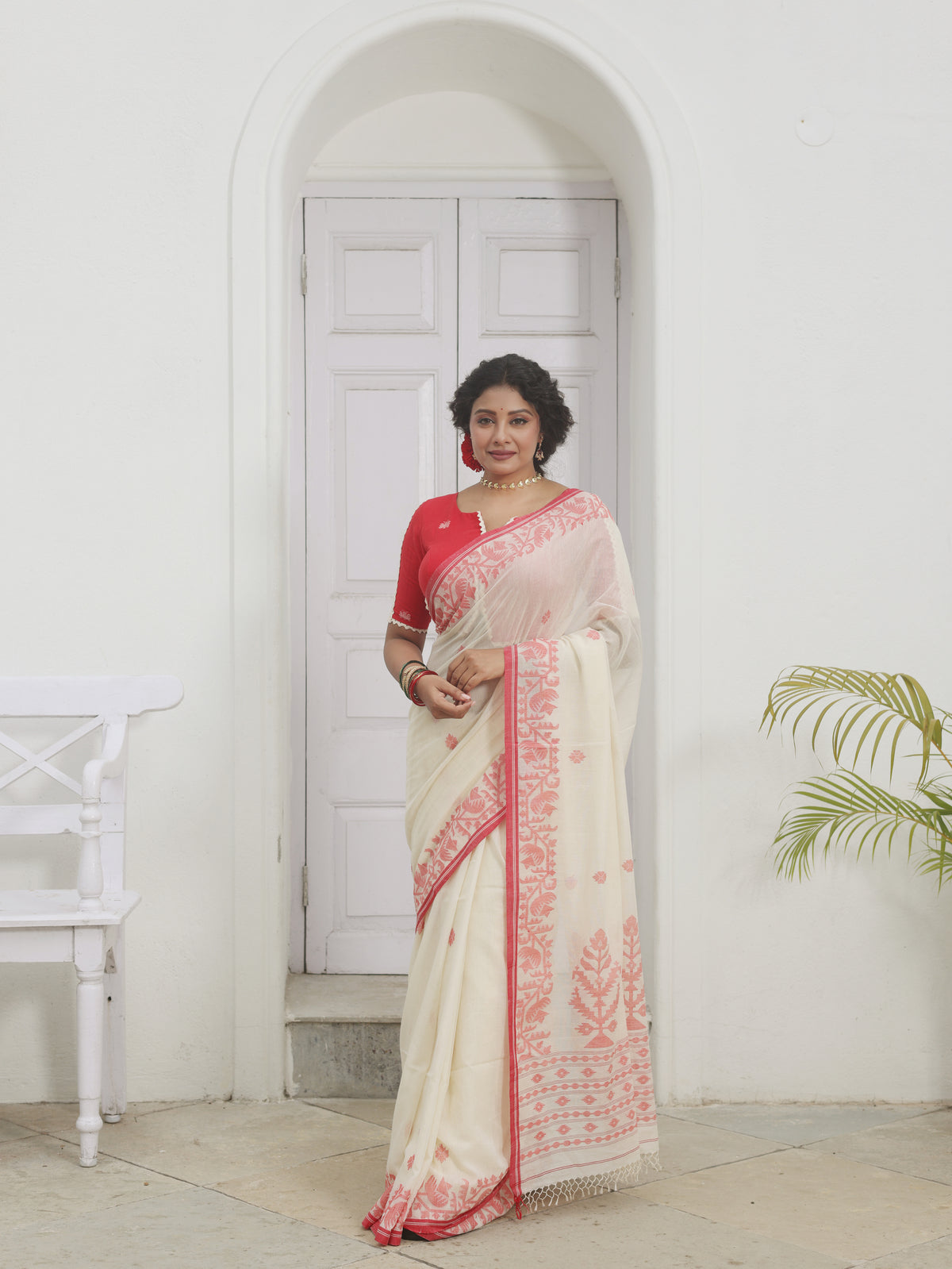
A Laal Paar saree is one of the most iconic styles in Bengali traditional clothing. The term Laal Paar refers to a red border, which is traditionally paired with a white or off-white saree body.
This classic red-and-white combination holds cultural importance in Bengal and is frequently worn during Durga Puja, religious ceremonies, weddings, and family celebrations.
Laal Paar sarees are available in different fabrics and weaving styles, including cotton, Jamdani, and silk varieties. Their borders can range from narrow and understated to broad and decorative.
The New Empire Classic Lal Par Sada Cotton Jamdani Saree offers an elegant interpretation of this traditional combination with its white cotton base and red Jamdani detailing.
The beauty of a Laal Paar saree lies in its versatility. It can be styled traditionally with gold jewellery and a red bindi or given a contemporary appearance with a modern blouse and minimal accessories.
3. Difference in Border Width and Design

The most noticeable difference between Mahapaar and Laal Paar sarees lies in what their names emphasise.
A Mahapaar saree is defined by the width and prominence of its border, whereas a Laal Paar saree is identified by its red border.
Mahapaar designs generally feature broad borders that create a bold and structured appearance. These borders may incorporate intricate weaving, contrasting stripes, and traditional decorative motifs.
Laal Paar sarees, on the other hand, can feature either narrow or broad red borders. Their defining characteristic is the red border itself rather than its width.
This means a saree can be both Mahapaar and Laal Paar when it features a broad red border.
The Thakurbari Lal Par Sada Cotton Jamdani Saree with Tussar Mahapar demonstrates this combination beautifully. It features a lightweight cotton body, coral-red Kolka motifs, and Tussar silk stripe detailing across its broad Mahapaar border and pallu.
4. Difference in Traditional Patterns and Motifs
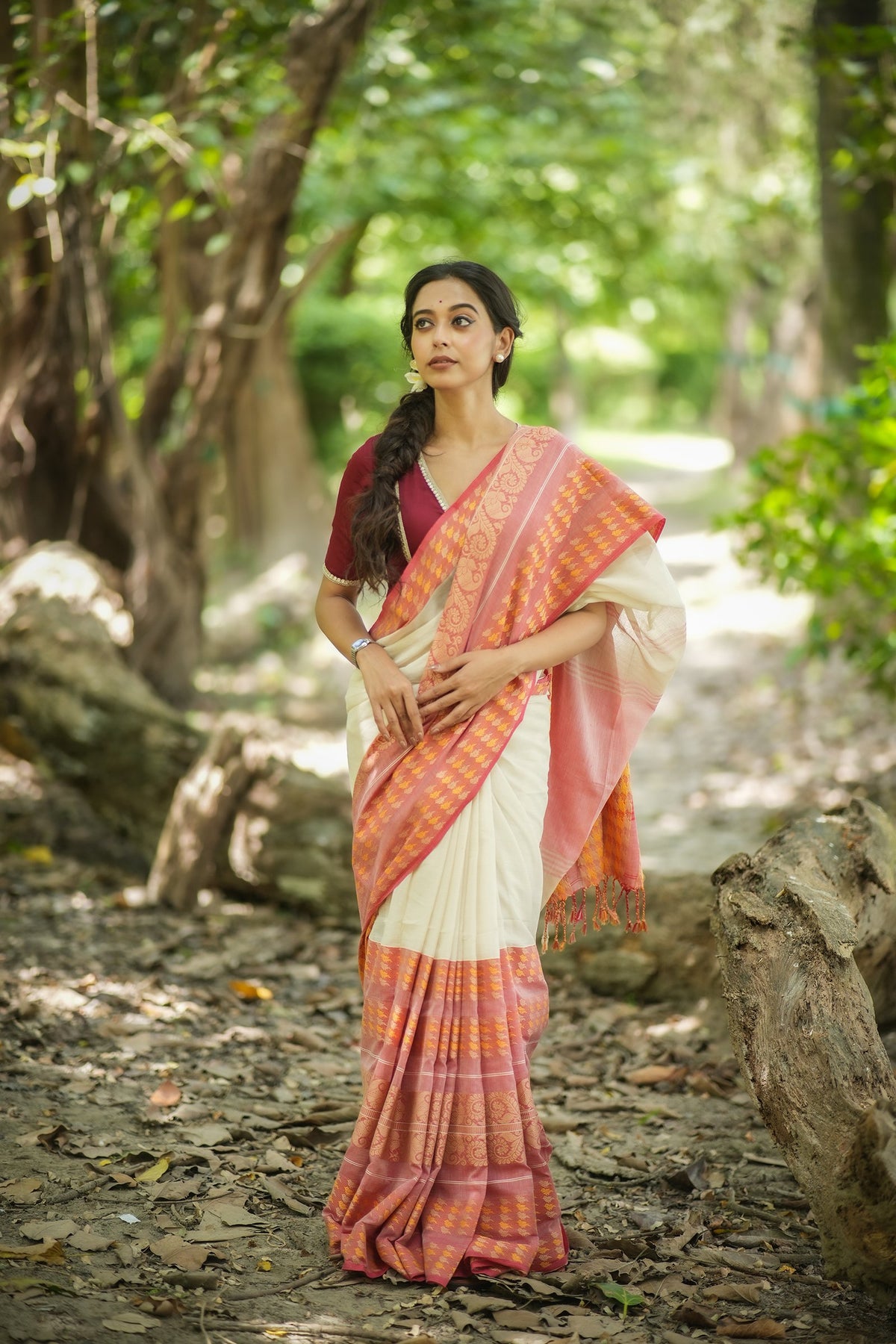
Traditional Bengali sarees are admired for their intricate motifs and weaving techniques. Both Mahapaar and Laal Paar sarees may feature Jamdani patterns, floral designs, geometric elements, and culturally inspired motifs.
Mahapaar sarees often emphasise the border as a major decorative feature. The wider border provides more visual space for elaborate patterns, making it an important part of the overall design.
Laal Paar sarees may feature simpler red borders or more decorative Jamdani patterns extending across the body and pallu.
The Mahapaar Alpona Lal Sada Handloom Jamdani Saree brings together traditional red-and-white styling and handloom Jamdani craftsmanship.
When choosing between these styles, consider whether you prefer a saree with a prominent decorative border or one where the red-and-white colour combination creates the main visual appeal.
5. Difference in Fabrics and Weaving Techniques
Both Mahapaar and Laal Paar sarees can be crafted using traditional Bengali weaving techniques. Cotton is particularly popular because of its breathability, comfortable drape, and suitability for India's warm climate.
Jamdani is another important weaving technique associated with Bengali handloom sarees. It involves creating decorative motifs during the weaving process, giving the fabric its distinctive patterned appearance.
Mahapaar sarees may incorporate cotton, silk, or blended textile elements depending on the design. Some feature additional detailing along the broad border to create a richer appearance.
Laal Paar sarees are also available in cotton Jamdani and other traditional handwoven fabrics.
Rather than assuming one style uses a particular fabric, examine the individual saree's material, weaving technique, and border detailing before making your choice.
6. Cultural Significance of Mahapaar and Laal Paar Sarees
Mahapaar and Laal Paar sarees reflect the artistic traditions and cultural identity of Bengal.
The classic Laal Paar Sada saree holds a special place in Bengali celebrations. Its red-and-white combination is commonly associated with auspicious occasions, particularly Durga Puja and traditional religious ceremonies.
Mahapaar sarees represent another important aspect of Bengali textile aesthetics, where broad borders and elaborate weaving contribute to the grandeur of traditional clothing.
Both styles can be seen as expressions of Bengali craftsmanship, where generations of artisans have preserved weaving techniques through carefully created textiles.
While Laal Paar sarees are especially recognised for their cultural symbolism, Mahapaar sarees are appreciated for their distinctive border designs and elegant traditional appearance.
7. Which Saree Is Better for Durga Puja and Traditional Celebrations?

Both Mahapaar and Laal Paar sarees are beautiful choices for Durga Puja and other Bengali celebrations.
A traditional Laal Paar saree is particularly popular during Durga Puja because of its association with Bengali festive clothing. The classic white-and-red combination is frequently styled with traditional jewellery, red bindis, and elegant hairstyles.
Mahapaar sarees can be equally suitable for festive gatherings, especially when you want a more prominent border and a visually striking drape.
The Bonedi Collection – Trinetra Lal Sada Mahapar Jamdani Saree combines a white base with broad red borders and traditional patterns incorporating black, gold, and red hues.
For a festive appearance, pair it with a coordinated blouse, gold jewellery, and a neatly arranged pallu.
Ultimately, the choice depends on whether you prefer the simplicity of a classic red-bordered saree or the more elaborate appearance of a broad Mahapaar border.
8. Styling Mahapaar and Laal Paar Sarees for Modern Occasions
Although both styles are rooted in Bengali tradition, they can also be adapted for contemporary fashion.
A Laal Paar saree can be styled with a sleeveless blouse, minimal jewellery, and comfortable footwear for daytime outings, cultural events, and family gatherings.
Mahapaar sarees can be paired with structured blouses, statement earrings, and elegant handbags to highlight their distinctive borders.
For a modern appearance, experiment with blouse colours such as ivory, black, deep red, or muted gold. You can also choose contemporary necklines, three-quarter sleeves, or shirt-style blouses.
The key is to balance the saree's design with your accessories. If the border is broad and decorative, keep the jewellery relatively simple. If the saree has a minimal design, you can introduce a statement accessory.
This allows you to preserve the traditional character of the saree while creating a look that feels suitable for modern occasions.
Mahapaar vs Laal Paar Sarees: Quick Comparison
|
Features |
Mahapaar Saree |
Laal Paar Saree |
|
Border style |
Broad, prominent border |
Red border, narrow or broad |
|
Colour combinations |
Red, white, pink, green, and other shades |
Traditionally white or off-white with red |
|
Design focus |
Border width and decorative patterns |
Classic red-bordered appearance |
|
Fabrics |
Cotton, Jamdani, silk, and other fabrics |
Cotton, Jamdani, silk, and other fabrics |
|
Traditional occasions |
Durga Puja, weddings, festive gatherings |
Durga Puja, religious ceremonies, weddings |
|
Overall appearance |
Bold and distinctive |
Classic and elegant |
|
Styling options |
Statement blouses and traditional jewellery |
Traditional or contemporary blouses |
How to Choose Between a Mahapaar and Laal Paar Saree
Choosing between these two traditional Bengali saree styles depends on your personal preferences, the occasion, and the overall appearance you want to create.
-
Consider the occasion: Choose a classic Laal Paar saree for traditional celebrations or a Mahapaar saree when you prefer a more prominent border.
-
Pay attention to border detailing: A broad Mahapaar border creates a striking appearance, while a simpler red border offers understated elegance.
-
Choose a comfortable fabric: Cotton and lightweight Jamdani sarees can be suitable for daytime gatherings and longer celebrations.
-
Match your accessories: Statement jewellery can complement simpler sarees, while minimal accessories allow intricate borders to stand out.
-
Consider your personal style: Both saree types can be styled traditionally or adapted to contemporary fashion.
Remember that Mahapaar and Laal Paar are not mutually exclusive categories. A broad red-bordered saree can combine the characteristics of both styles.
Frequently Asked Questions
1. What is the main difference between Mahapaar and Laal Paar sarees?
The main difference lies in the border design. A Mahapaar saree features a broad, prominent border, while a Laal Paar saree is identified by its red border, traditionally paired with a white or off-white body. A saree can feature both characteristics.
2. Are Mahapaar and Laal Paar sarees the same?
No. Mahapaar refers to a broad border, whereas Laal Paar refers to a red border. However, some traditional Bengali sarees feature broad red borders and can be described using both terms.
3. Which saree is better for Durga Puja, Mahapaar or Laal Paar?
Both styles are suitable for Durga Puja. Laal Paar sarees are especially associated with traditional Bengali festive attire, while Mahapaar sarees offer a bold appearance through their prominent borders and decorative patterns.
4. Can Mahapaar sarees be worn for weddings?
Yes. Mahapaar sarees can be styled for Bengali weddings, family celebrations, and festive gatherings. Choose a design with elegant border detailing and pair it with traditional jewellery for a sophisticated appearance.
5. Are Mahapaar sarees available in colours other than red and white?
Yes. Mahapaar describes the width of the border rather than a particular colour combination. These sarees can feature pink, green, purple, red, and other shades, depending on the design and weaving style.
6. Which fabric is best for Mahapaar and Laal Paar sarees?
Cotton and handwoven Jamdani are popular choices for both styles. Cotton offers breathability and comfort, while Jamdani adds intricate woven motifs. The best fabric depends on the occasion, weather, and your personal preferences.
Discover Traditional Bengali Sarees at Kathatale
Mahapaar and Laal Paar sarees beautifully represent the elegance and craftsmanship of Bengali handloom traditions. While Mahapaar sarees are admired for their broad, decorative borders, Laal Paar sarees remain timeless for their classic red-and-white combination and cultural significance.
Whether you are dressing for Durga Puja, a wedding, a family gathering, or a cultural celebration, both styles offer beautiful ways to express your appreciation for Bengali heritage.
Explore the handwoven creations at Katha – A Tale of Weaves and discover sarees that bring together traditional craftsmanship, elegant designs, and contemporary styling possibilities. Choose a saree that reflects your personality while celebrating the enduring beauty of Bengal's weaving traditions.
