

Katha’s New Tale: Telling Stories with Baluchari Sarees
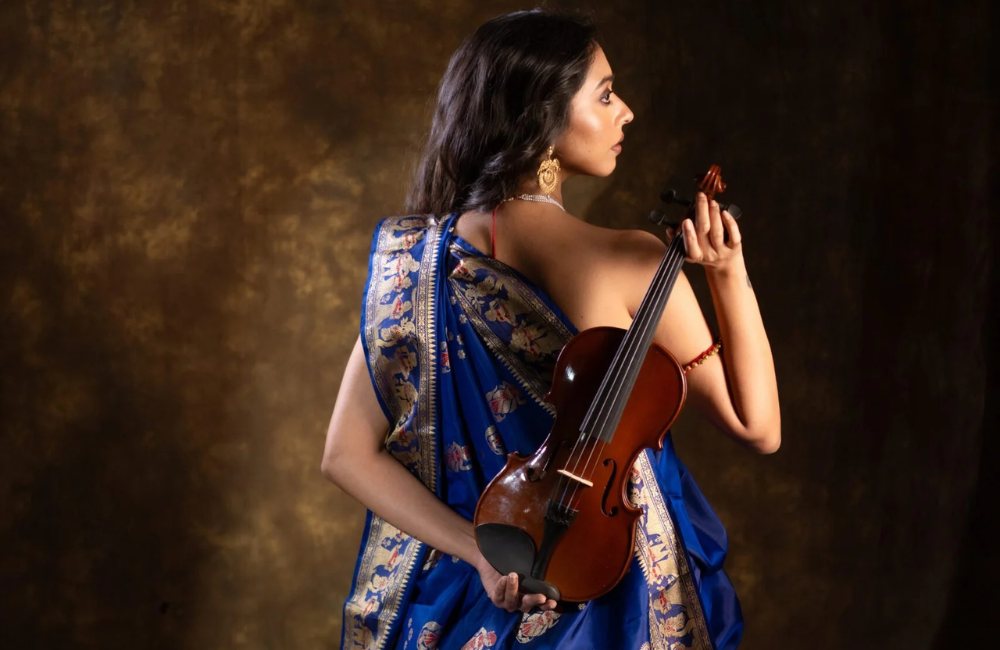
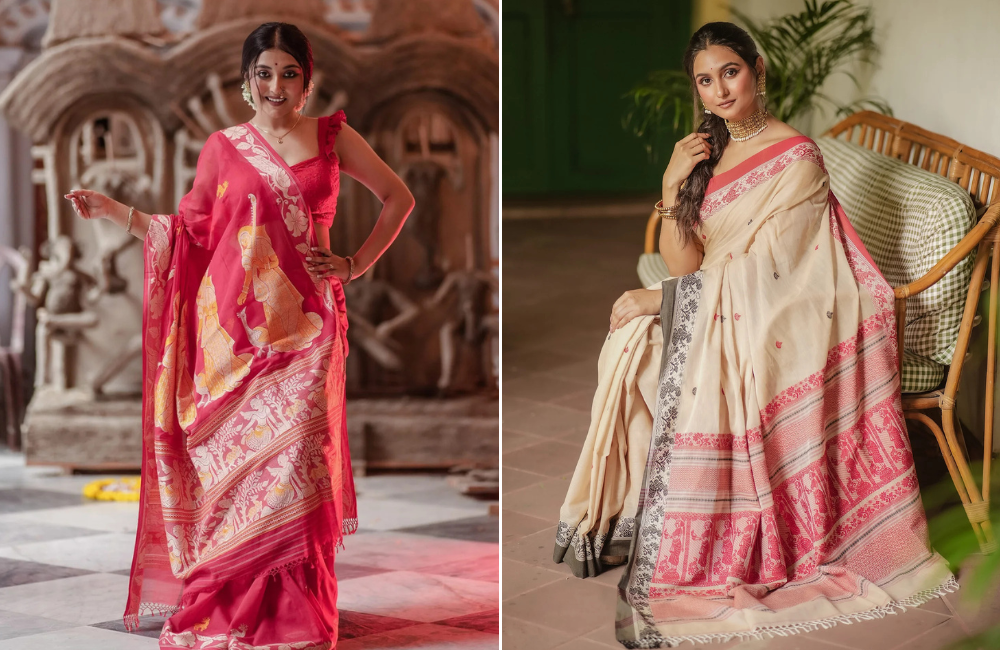
If you’ve ever paused to look closely at a handloom Baluchari saree, you’ve probably noticed something remarkable—the pallu is trying to tell you a story. Not just any story, but scenes filled with characters, emotions, and moments drawn from mythology and history.
It’s not just design. It’s a narrative woven into silk.
At Katha: A Tale of Weaves, we’ve embarked on this meaningful storytelling journey. Let’s slow down for a moment and truly explore the charm of Baluchari sarees.
As you browse our collection, you’re discovering scenes from mythology, glimpses of royal courts, and echoes of a rich cultural past, all captured in 100% pure Mulberry silk. Shopping for Baluchari sarees online becomes a journey, where each piece feels as if it’s waiting to be chosen for its story as much as for its beauty.
Origin and Historical Background of Baluchari Sarees
Bengali Baluchari sarees trace their origins to 1704 CE, when Murshid Quli Khan moved Bengal’s capital from Dhaka to Murshidabad. He brought skilled artisans with him, who settled in the riverside village of Baluchar. There, amidst the quiet rhythm of looms and the flow of the Ganga, a delicate art began to take shape.
But the river, ever-changing, reclaimed the village in time. Displaced yet undeterred, the weavers journeyed to Bishnupur, where under the patronage of the Malla kings, their craft blossomed into a distinctive style. Here, the threads whispered stories of myth, courtly life, and devotion.
Then, under colonial rule, the art disappeared.
However, centuries later, the fading echoes of this tradition found new life through the vision of Shubho Thakur. Partnering with master weaver Akshay Kumar Das, he returned to the old motifs and memories woven into surviving sarees. With the introduction of jacquard techniques, they reawakened the loom’s voice.
A Tradition Rooted in Storytelling
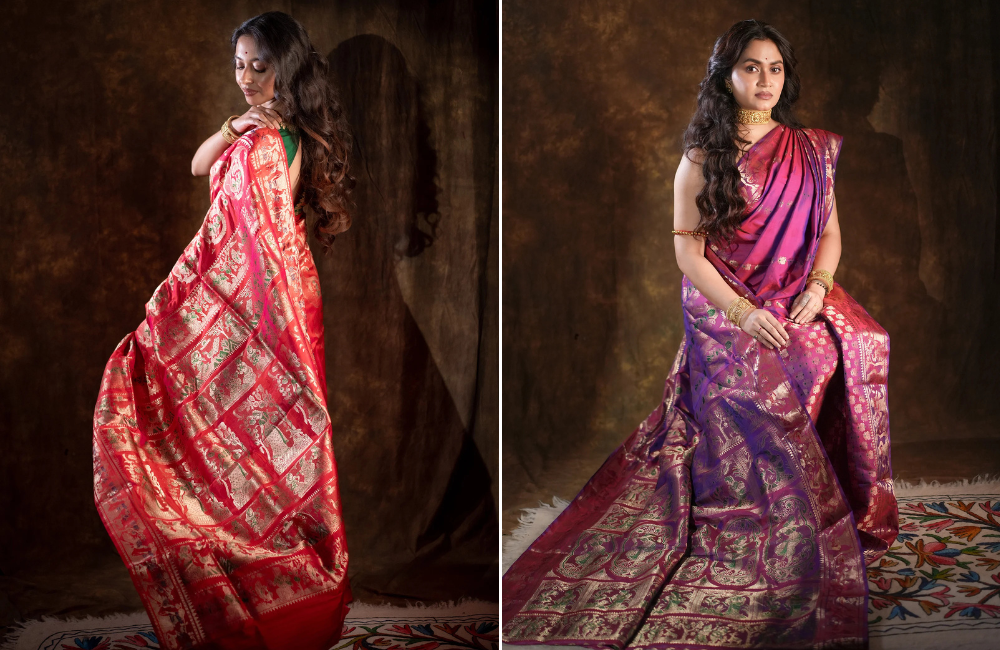
Historically, Baluchari sarees were patronized by royal families and affluent households. Weavers didn’t just create patterns. They depicted tales from epics like the Ramayana and Mahabharata, along with scenes from court life.
The pallu became the perfect canvas for this expression. It’s the most visible part of handloom Baluchari silk sarees online, making it ideal for showcasing detailed artwork. At the heart of it, the Baluchari pallu is about connection—to stories, to culture, and to craftsmanship. It turns a saree into something more personal and meaningful.
When you see a Baluchari saree at Katha, take a moment to admire the pallu. You might just find yourself reading a story that has been woven, capturing centuries of history and heritage.
The Artistry of Silk and Cotton Baluchari
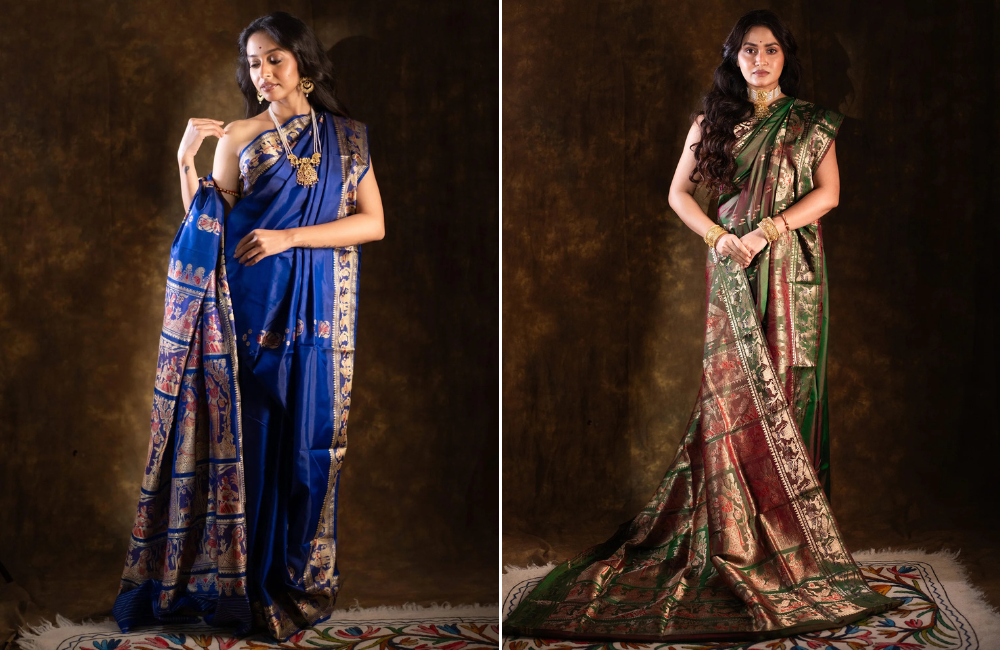
While Baluchari sarees are traditionally made of 100% pure mulberry silk, cotton versions have also gained popularity for their comfort and everyday wearability. Both retain the signature storytelling pallu, though the texture and finish differ, which we have achieved in our Baluchari cotton saree, like Akhyan – Red Baluchari Cotton Saree. We have used complex weft techniques and kept the storytelling alive, but on a different canvas!
Silk Baluchari sarees often have a more formal appeal. Our Rajkatha – Baluchari Silk Saree in Royal Blue with Regal Mythological Weaves or Mahakatha – Lush Green Baluchari Silk Saree with Grand Mythic Border Weaves are perfect for weddings and special occasions. These sarees are soft yet substantial, with that unmistakable richness that only pure mulberry silk can offer. And with a Silk Mark certification, there’s a sense of reassurance woven within its intricate zari work. You know what you’re holding is authentic, handwoven with integrity and care.
Keeping the Tradition Alive Today at Katha
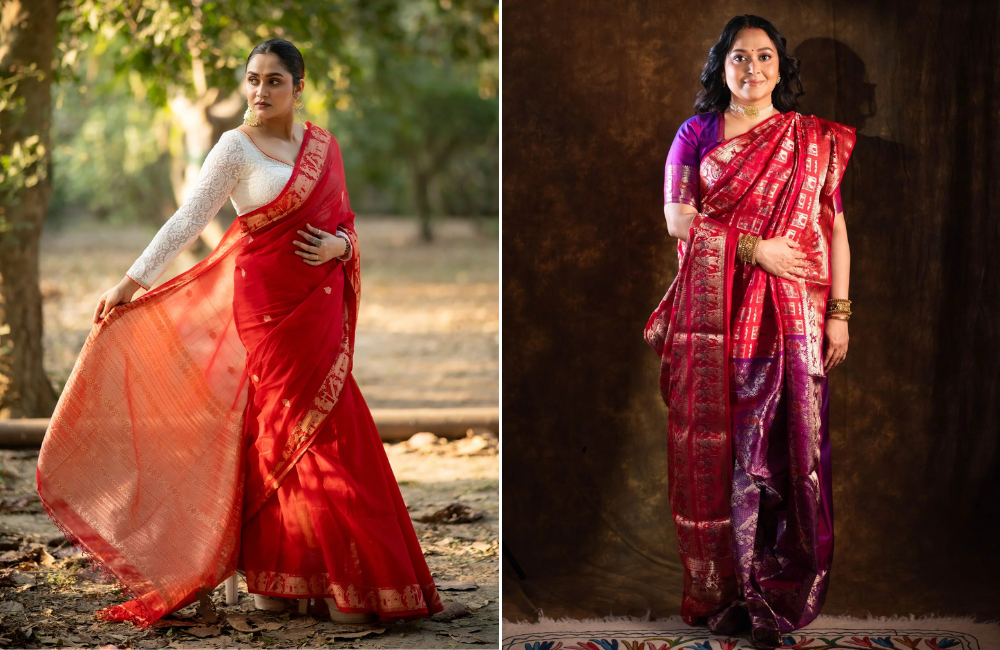
In today’s fast fashion world, the significance of handcrafted textiles can sometimes be overlooked. But the unique motifs and designs of Baluchari sarees continue to hold their place. They aren’t just garments but pieces of art with purpose.
Choosing an authentic handloom Baluchari saree also supports the artisans who keep the tradition alive.
So, if you’re looking to explore genuine handloom Baluchari silk and cotton sarees, you have to visit us at Katha: A Tale of Weaves. Our collection reflects both tradition and authenticity, weaving tales new and old for the modern saree lover. We’re writing a new tale that truthfully represents the essence of traditional Baluchari weaving, but with a modern twist!
FAQs
1. What is special about Baluchari sarees?
Baluchari sarees are like wearable art. Woven from pure silk using a complex weft technique, they feature intricate scenes from mythology or court life on the pallu, making each one a unique narrative masterpiece. Originating in West Bengal, they’re known for their rich, luxurious silk and detailed borders, with Swarnachari being the ultimate luxe version with gold/silver threads.
2. Which district is famous for Baluchari sarees?
The Bankura district is famous for Baluchari sarees. The sarees are predominantly made in the town of Bishnupur within the district.
3. What is the difference between Baluchari and Jamdani?
Baluchari and Jamdani are two of Bengal’s most celebrated sarees, but they differ in both fabric and artistry. Jamdani is handwoven on fine cotton or muslin, featuring delicate floral and geometric motifs created through the extra-weft technique. These motifs are identical on both sides of the fabric, a hallmark of authenticity, and Handloom Jamdani sarees carry a GI tag along with the Handloom Mark.
On the other hand, Baluchari is woven from 100% pure mulberry silk and is distinguished by its elaborate pallus that depict mythological and storytelling scenes. At Katha, our Baluchari sarees come with the Silk Mark, certifying the purity of the silk.