

Nature on Loom: The Story of Animal Motifs in Bengal Handloom Sarees
Isn’t it magical when you spot a peacock hidden in the folds of a saree? Or an elephant marching quietly along the pallu like it has wandered out of an old Bengali folktale? Well, Bengal’s handloom tradition has always loved storytelling, and animal motifs are some of its most charming narrators.
Much like a carefully styled living room where every object has a story, the handloom sarees of Bengal are layered with symbolism, craft, and emotion. From regal elephants in Baluchari cotton sarees to playful birds in Jamdani patterns, these motifs carry pieces of Bengal’s cultural imagination.
Today, at Katha: A Tale of Weaves, we’re keeping these stories alive through handcrafted sarees rooted in heritage while still fitting seamlessly into modern wardrobes.
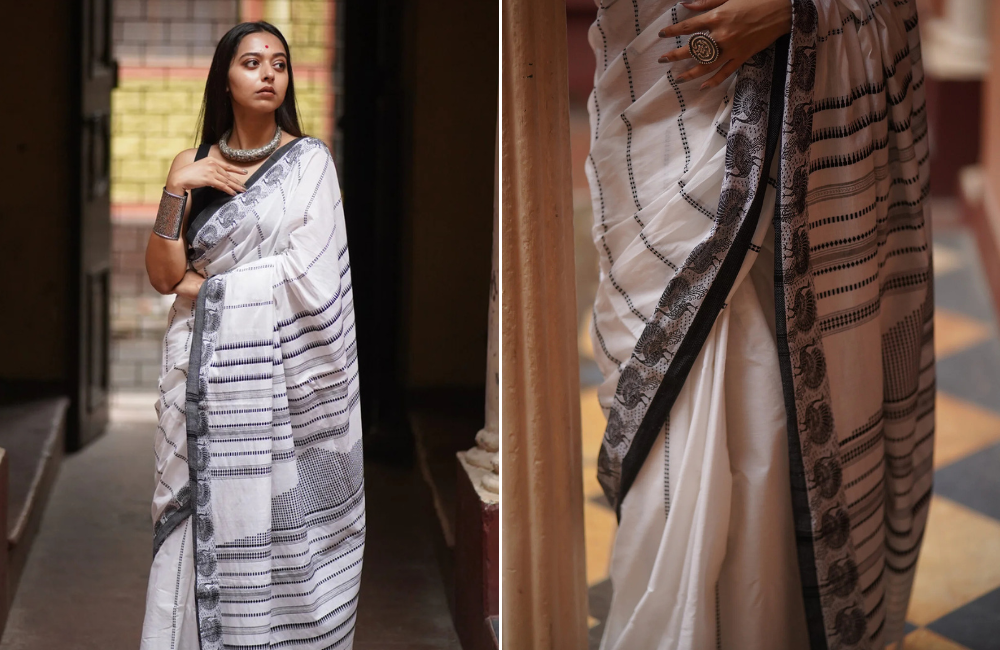
Why Animal Motifs Matter in Traditional Bengal Weaving
Traditional handwoven sarees in Bengal have always drawn inspiration from nature. Rivers, flowers, birds, and animals often found their way into textile patterns because they reflected everyday life and spiritual beliefs.
Elephants, for instance, symbolise royalty, wisdom, and prosperity. In Bengali art and temple carvings, they’re often linked with celebrations and abundance. Peacock motifs represent grace, beauty, and romance. Birds woven into handloom Jamdani sarees usually hint at freedom, joy, and the poetic side of Bengali culture.
These heritage saree motifs weren’t randomly added for decoration. They were carefully woven to tell stories without words. That’s what makes woven animal motifs feel timeless even today.
The Regal Beauty of Baluchari Sarees
If Bengal’s weaving traditions had a grand storyteller, it would probably be the Baluchari saree. Known for its intricate narrative motifs, Baluchari originally flourished in Murshidabad under royal patronage.
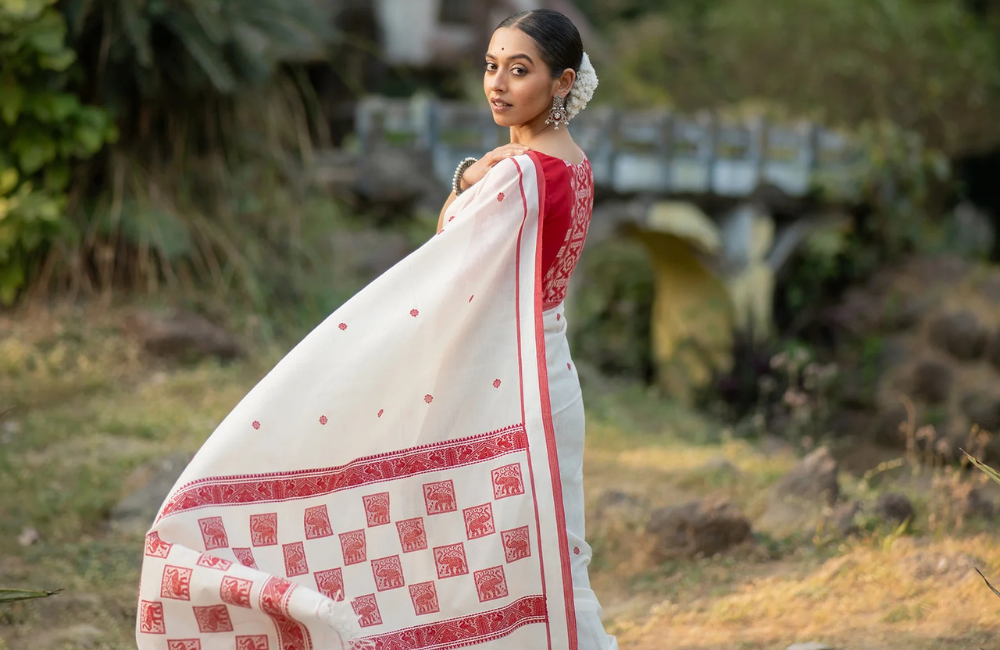
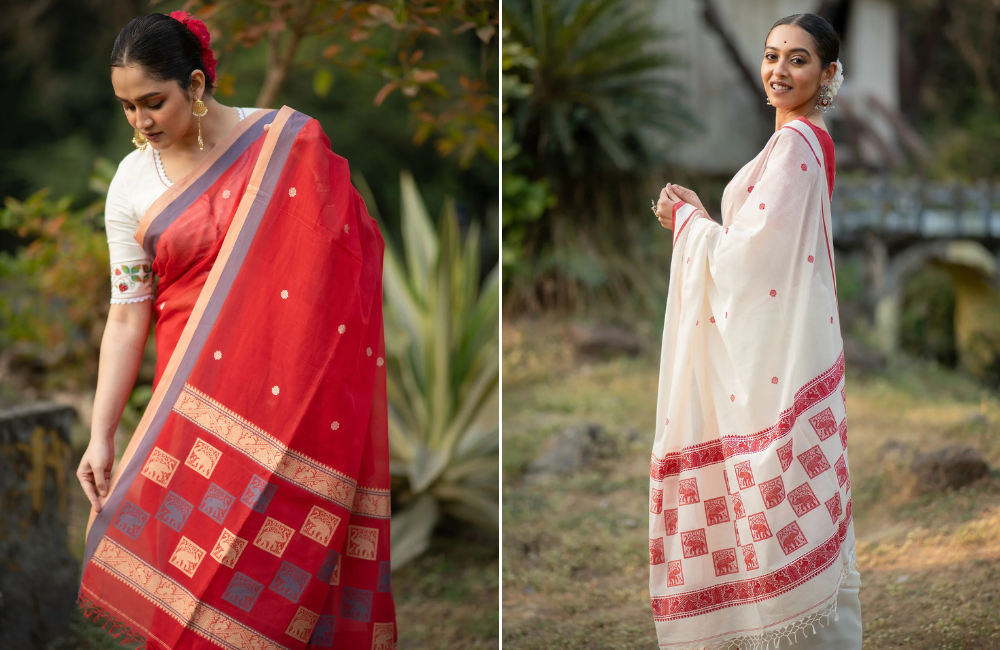
While many people know Bengali Baluchari silk sarees online for mythological scenes, animal motifs are equally significant. The elephant motifs often seen in cotton Baluchari sarees create a sense of rhythm and movement across the weave.
A lovely example is our Gajkatha Red Baluchari Cotton Saree. The elephant detailing feels traditional without looking heavy, making it ideal for festive gatherings or cultural events.
Another striking piece is our Gajmayur Lal Sada Baluchari Cotton Saree, where elephant and peacock motifs come together beautifully. It captures the spirit of traditional Bengal weaving while remaining easy to style with a simple Jamdani blouse or handcrafted silver jewellery.
Handloom Jamdani Sarees and Their Love for Birds
If Baluchari sarees are elaborate storytelling murals, handloom Jamdani sarees are poetry written in thread.
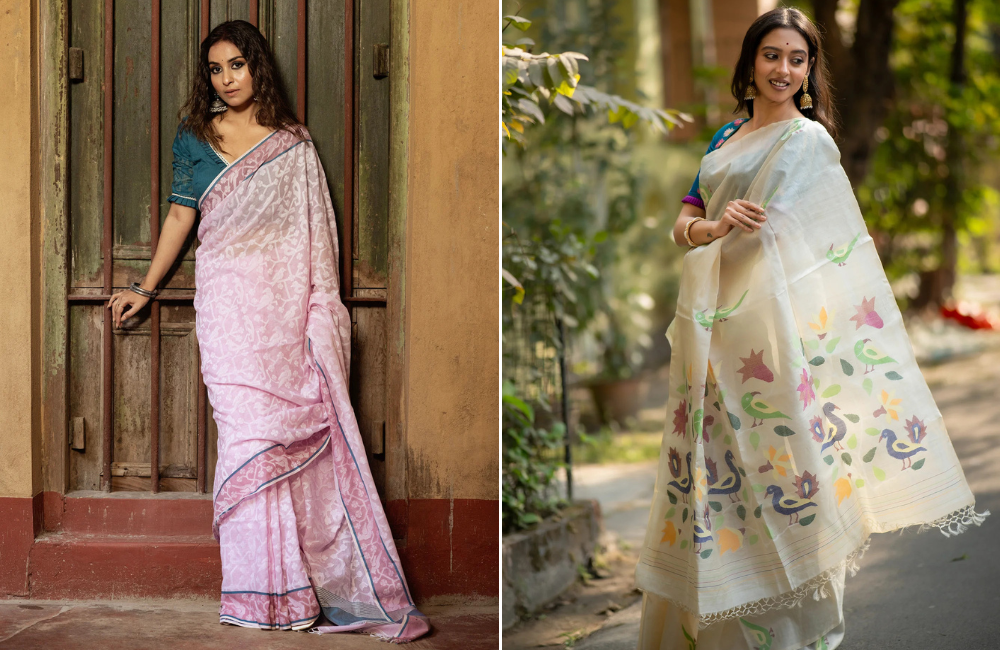
The Jamdani saree tradition is celebrated for its airy weave and delicate motifs that almost seem to float on the fabric. Birds appear frequently in Jamdani work because they bring lightness and movement to the design.
Our Golapi Mon Pakhi Cotton Jamdani Saree perfectly reflects this playful charm. The bird motifs feel soft and lyrical, almost like a song translated into fabric.
For someone looking to buy pure tussar Jamdani sarees with artistic detailing, the Pakhi Mor Jamini Pure Tussar Silk Saree with Handwoven Peacock Parrot Floral Needlework is a beautiful example of textile storytelling. The peacock and parrot motifs add colour and movement without overwhelming the weave.
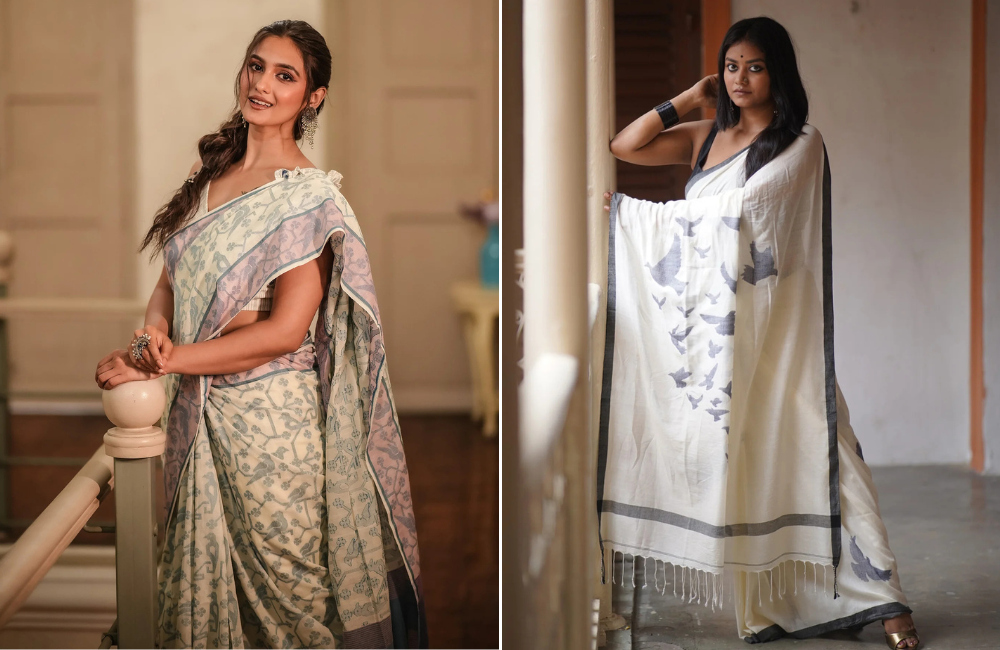
Then there’s the dreamy Feathered Fables Azure Sky Handloom Jamdani Saree and the cheerful Happy Bird Jamdani Phulia Cotton Saree, both of which celebrate Bengal’s long relationship with bird-inspired artistry.
These are the kinds of Jamdani sarees online shoppers increasingly look for today—pieces that feel handmade, meaningful, and easy to wear beyond special occasions.
What makes animal motif sarees so enduring is their emotional connection. They remind people of old Bengali homes, temple terracotta art, monsoon afternoons, and family celebrations. They bring warmth into clothing in the same way thoughtful interiors bring warmth into a home.
That’s where we stand out. We don’t simply sell sarees, but curate stories through handloom sarees of Bengal. Every weave reflects the artistry of local weavers while making heritage feel approachable for contemporary wardrobes.
In a world of fast fashion, our sarees quietly remind us that beauty often lies in detail, sometimes in the curve of a peacock feather, sometimes in the steady march of an elephant across a pallu.
Experience this wonder for yourself. Visit our collection online or drop by our studio in Sector II, Bidhannagar, Kolkata – 91!
FAQs
1. What do animal motifs in Bengal handloom sarees symbolise?
In Bengal handloom sarees from Katha: A Tale of Weaves, animal motifs like elephants, parrots and peacocks symbolise royalty, prosperity, elegance, and a deep connection to nature.
2. When did animal motifs first appear in Bengal handloom sarees?
Animal motifs first appeared in Bengal handloom sarees during the ancient and medieval eras, flourishing under royal patronage in Murshidabad.
3. Which animals are most frequently depicted in Bengal sarees?
Elephants, Tigers, Peacocks, Fish, Parrots, and Butterflies are the animals most frequently depicted in traditional Bengal handloom sarees.
4. Do motifs differ between Jamdani, Baluchari, and Kantha sarees?
Yes. Jamdani features geometric floral patterns, Baluchari depicts royal and mythological scenes, while Kantha showcases folk art and nature stories. At Katha, the varieties of handloom sarees also contain rich depictions of fauna, transforming Bengal’s weaving tradition for modern wardrobes.
5. Do handloom animal motifs differ from power loom imitations?
Yes. Handloom motifs show unique, slightly irregular human craftsmanship, while power loom imitations are perfectly identical, flat, and lack texture.